
More Than a Yearbook: Chimacum Students Build Community One Page at a Time
For most students, receiving a yearbook marks the end of another school year. At Chimacum Junior Senior High School, however, the yearbook represents something bigger, a year-long collaborative effort to capture the stories, achievements, and experiences of an entire school community. Tahl Kie Chee has remained the name of the yearbook. In Chinook Jargon, it translates to “New Yesterday” or “Recent Past”.
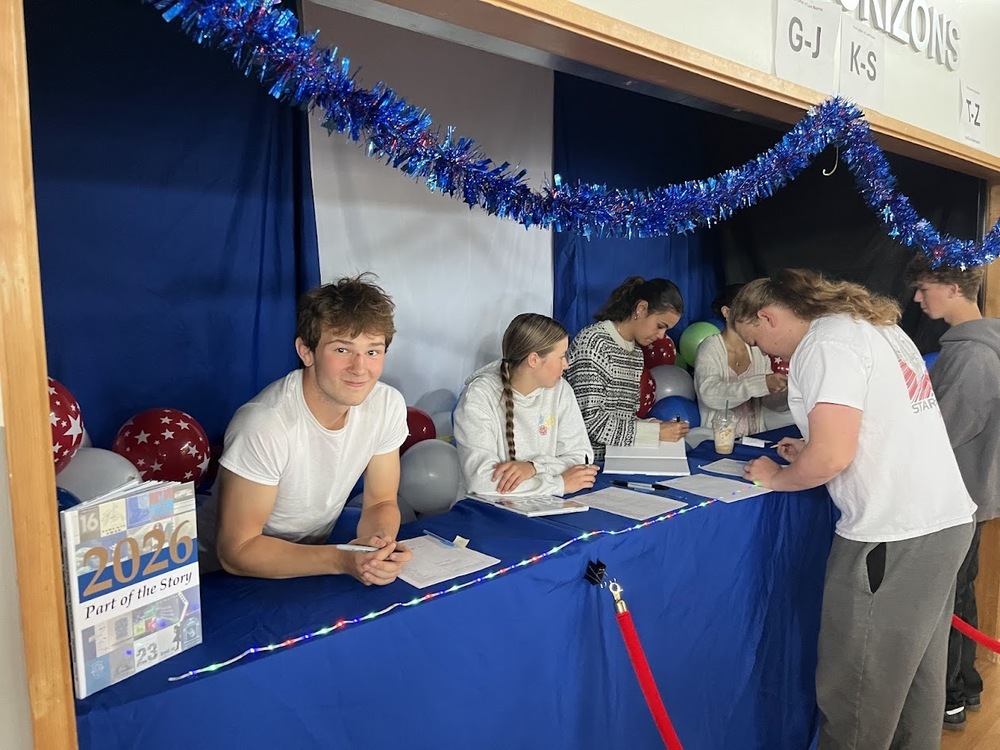
On June 5, students gathered in the school commons for the annual Tahl Kie Chee yearbook distribution celebration. With music playing and a festive atmosphere filling the room, students eagerly received their books, signed messages for friends, shared memories, laughed together, and reflected on the year. The celebration extended into lunch, creating a relaxed and joyful atmosphere that highlighted what makes Chimacum special: a strong sense of community.
Behind the finished book is a dedicated team of students guided by yearbook advisor and teacher Gary Coyan, who works to ensure that creating and distributing the yearbook is a positive and meaningful experience for everyone involved.
That commitment to inclusion recently earned Chimacum Junior Senior High School national recognition. The school received Gold Level distinction in the Jostens National Yearbook Program of Excellence last year, an honor awarded to yearbook programs that go beyond producing a high-quality publication to create a yearbook that is accessible for all students.
The award measures success in several categories. One key requirement is ensuring that at least 50 percent of students are featured three or more times throughout the yearbook. Chimacum far exceeds that benchmark. Last year, an impressive 92 percent of students were featured three or more times. This year, the school achieved 86 percent, well above the national standard.
That level of inclusion does not happen by accident. Student yearbook staff members Emma Joy and Ethan Petrovich said the team works intentionally to make sure the book represents the entire student body. Emma joined the yearbook club because of her interest in journalism and encouragement from a friend. Throughout the year, she stepped outside her comfort zone by photographing events and interviewing classmates. Emma took pictures at track meets because she was already part of the team. She explained that she can be shy but learned to approach people she had never talked to before, asking questions and getting quotes.
For Ethan, the creative and technical aspects of yearbook production became a favorite part of the process. He learned how to create templates for different sports pages and enjoyed the challenge of figuring out something new.
Using the Jostens digital platform, students collaborate on layouts, design decisions, and page development. Ethan learned the power of collaboration, listening to each other’s ideas and combining them together. When determining the theme for the yearbook cover, Gary broke up the club into small groups before coming back together. Ethan realized in the process that the best ideas were combinations of several different ideas.
The students recognize that their work has lasting significance. "People will have these books for their entire lives," Ethan said.
Throughout the process, Coyan encourages students to take ownership of the publication while providing guidance when needed. Both Ethan and Emma describe him as a supportive mentor who values student ideas and creates an environment where everyone feels comfortable contributing.
Emma and Ethan both describe Gary as fun, welcoming different ideas and never dismissive. There were times when Coyan devoted personal time to helping students refine page layouts and create effective templates.
The learning process isn't always easy. Emma said one of the challenges was accepting feedback and seeing her designs change after input from others. Those experiences helped students build resilience, improve their design skills, and learn how to work through constructive feedback, a valuable lesson that extends well beyond the classroom.
Despite the deadlines and occasional stress of producing a publication on schedule, both students said the yearbook club remains one of the most enjoyable activities at school.
Gary set the tone building personal relationships with everyone. Sometimes they play the New York Times Connections game.
Ethan liked the moments when it got intense or stressful, making hard decisions. He found it more engaging than a regular classroom because everyone was involved.
The yearbook club is open to nearly any student interested in participating. Members must be responsible and capable of meeting deadlines. The combination of creativity, accountability, and teamwork help students produce a publication that celebrates the entire school.
As students flipped through pages, signed one another's books, and enjoyed the June 5 celebration, it was clear that the yearbook is more than a collection of photographs and memories. It reflects Chimacum's commitment to inclusion, collaboration, and community—a tradition built one page at a time by students who understand the value of making sure everyone belongs in the story.